
Quick Summary
Puppy play is a role-play where one person takes on a canine persona, the pup, while a partner acts as the handler and directs the scene. Beginners should start with clear boundaries, a simple vocabulary of commands, and a shared stop signal before any gear goes on.
- Negotiate boundaries and stop signals before any gear goes on.
- Use specific examples when setting limits, not vague phrases like no rough play.
- Agree on a physical stop signal in case speech is hard in a hood.
- Keep the command vocabulary small, with a clear physical cue for each command.
- Measure your head and try hoods on before a session to check comfort and breathing.
Table of Contents
- What Puppy Play Is and Why People Enjoy It
- Understanding Pup and Handler Roles
- Setting Boundaries, Consent and Negotiation Before Play
- Basic Commands, Activities and Play Styles
- Puppy Play Gear: What to Start With
- Puppy Hood Fitting Guide: Getting Sizing and Comfort Right
- Staying Safe: Comfort, Aftercare and Sensory Needs
- Community Etiquette and Your First Event or Fitting Visit
- Frequently Asked Questions
Underground Fetish, the Amsterdam shop at the heart of the Eiuropoean puppy community, welcomes beginners who are wondering where to start with puppy play. A beginner guide to puppy play answers that question in plain terms, covering the roles, the gear, the boundaries and the community manners that make a first experience safe and enjoyable.
Puppy play is a form of role-play in which one person takes on a canine persona, often called the pup, while a partner takes the handler role and directs the play. It sits within the wider BDSM and kink community, but the emphasis is on playful identity, trust and physical comfort rather than any single set of rules. People come to it for different reasons: some want to step out of everyday responsibilities, some enjoy the headspace of a pup persona, and others simply like the physicality of crawling, fetching and being guided.
Overview of consent and negotiation in kink communities
What Puppy Play Is and Why People Enjoy It
Puppy play is best understood as a structured role-play rather than a single activity. The pup agrees to respond to the handler’s cues, and the handler agrees to look after the pup’s safety and comfort. That agreement is the foundation of the whole scene.
Many people describe a shift in mindset during play, where the scene takes on a simpler rhythm of commands and responses.
Understanding Pup and Handler Roles
The two roles complement each other, and neither works well without the other. A pup who has no trust in the handler will hold back, and a handler who ignores the pup’s limits will quickly lose the scene.
Pup Headspace and Persona
Headspace is the mental state a pup slips into during play. Some pups find it helpful to choose a name or persona before a session, which gives the role a clear starting point. Others prefer to let it develop naturally. Either approach works, as long as the pup can step back out of the role when needed.
Handler Skills and Responsibilities
A good handler watches body language closely, keeps commands clear and consistent, and checks in regularly. The handler is also responsible for ending the scene when a limit is reached, so attention to the pup’s signals matters more than any particular technique.
Setting Boundaries, Consent and Negotiation Before Play
Negotiation happens before any gear goes on, and it is an important part of a first scene. Treat it as a short, structured conversation rather than a formality.
A practical pre-play checklist covers four areas. First, what each person wants from the scene: a quiet, affectionate session, an energetic one, or something playful with a social or emotional focus. Second, what is off limits, including specific physical contact, gear, locations, or topics such as photos. Third, the signals that will pause or stop the scene. Fourth, the aftercare each person expects.
Boundary-setting works best with concrete examples. Instead of saying “no rough play,” a partner might say “no pulling on the collar, no crawling on hard floors, and no leash work in public.” Specific wording helps prevent guesswork during play.
Use a stop system that works even when speech is hard. A verbal safe word is common, but many people also agree on a physical signal such as tapping twice or dropping an object, because a pup in a hood may not be able to speak clearly. Both partners should be able to use the signal without explaining why.
Write the agreements down if that helps. A short list kept on a phone is enough, and it can be reviewed before each new session rather than rebuilt from memory.
Aftercare is part of negotiation, not an afterthought. Agree in advance on what happens once the scene ends: a few minutes of quiet, water, a check-in the next day, or simply space. Many people feel emotionally open or physically tired after play, and deciding this beforehand means nobody is left guessing.
Watch out: a partner who pressures you to skip negotiation or to try gear you have not agreed to is ignoring the basis of consent, and the scene should stop there.
Basic Commands, Activities and Play Styles
Most scenes rely on a handful of basic commands such as sit, stay, come and circle. Keep the vocabulary small at first. Each command should have a clear physical cue, so the pup can respond without needing to think.
Common activities include crawling, fetching a toy, and short walks on a leash. Play styles vary widely, from quiet, affectionate scenes to more energetic sessions. Start gently and build up only as both partners feel comfortable.
Puppy Play Gear: What to Start With
You do not need much to begin. A collar is the most common first purchase, and a leash can come later once the pup is comfortable with guidance. Choose materials that are easy to clean and comfortable during longer sessions. Neoprene and leather are common materials, and each has different strengths in terms of feel and maintenance.
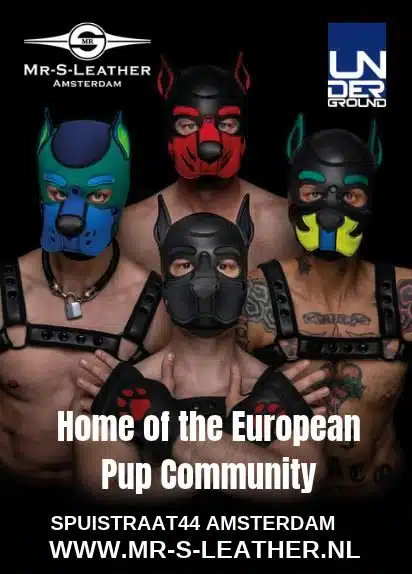
Underground Fetish – Home of the European Pup Community
Visiting a shop where staff can show you options in person can help you judge gear before buying.
Puppy Hood Fitting Guide: Getting Sizing and Comfort Right
Fit matters a great deal for hoods, because it affects breathing, vision and comfort. Measure your head before ordering, and check whether the hood’s sizing chart uses head circumference or a size label. A hood that is too tight can cause discomfort within minutes, while one that is too loose can shift during play.
Try hoods on before a session when you can. Pay attention to eye and mouth openings, and make sure you can breathe easily with the hood fully on. If a fitting is available in person, it can help you find a suitable size.
The table below sums up the sizing and fit checks the article recommends before wearing a hood.
|
Check |
Why it matters |
Source note |
|---|---|---|
|
Measure your head |
Helps you order the right size |
Before ordering |
|
Check the sizing chart on the product page |
Shows whether it uses circumference or a size label |
Compare charts |
|
Try on before a session in store |
Reveals comfort problems early |
When possible |
|
Test breathing with hood fully on |
Breathing must stay easy |
Stop if tight |
|
Check eye and mouth openings |
Affects vision and comfort |
Before play |
|
Watch for loose shifting |
Hood can move during play |
Adjust fit |
Staying Safe: Comfort, Aftercare and Sensory Needs
Safety in puppy play covers more than the equipment, and the most common first-session problems come from ignoring body signals rather than from gear choice.
Watch for overheating, especially in neoprene hoods during long sessions. Take breaks, drink water, and remove gear the moment it causes pain, dizziness, or breathing trouble. Breathing should stay easy with the hood fully on, and any tightness that does not ease quickly is a signal to stop.
Adapting play to your body is normal. Mobility limits can change how a pup moves: crawling may be replaced with kneeling, sitting, or a scene built around fetching and commands from a chair. Joint or back problems may call for padding under the knees and shorter sessions. These changes keep the role intact.
Sensory needs vary widely. Some people find hoods overwhelming because of restricted vision, sound, or temperature. Alternatives include open-face masks, partial gear such as just a collar and ears, or scenes played without a hood at all. The pup persona can rest on voice, posture, and commands rather than on covered features. Raise these needs during negotiation so nobody feels pressured into gear that does not suit them.
Budget and access also shape what is practical, and a persona can be built with clothing you already own. Participating without a hood or purchasing expensive equipment does not make a scene less valid.
Aftercare matters just as much. Many people feel emotionally open or physically tired after a scene, and a quiet period of reconnection helps. Have water, a blanket, and a calm space ready, and check in with your partner once you are out of the role.
Watch out: if you feel dizzy, numb, or short of breath during a scene, end it immediately and remove the gear before continuing.
Community Etiquette and Your First Event or Fitting Visit
The puppy community is welcoming, but it runs on shared manners. Ask before touching anyone’s gear, respect people who are not in a scene, and avoid taking photos without permission. Arriving at a first event or fitting visit with a clear idea of what you want, and with questions ready, makes the experience smoother for you and for the staff.
If you are visiting Amsterdam for an event such as Wasteland, plan your gear visit ahead of time. Underground Fetish is located in the centre of Amsterdam, five minutes from Central Station. Contact the shop for current stock, pricing and any appointment options.
Frequently Asked Questions
What is the 3-3-3 rule for puppies?
The 3-3-3 rule is an informal shorthand that describes the adjustment period for newcomers to a new routine. It is not a formal standard, and it is not related to puppy play. In a puppy play context it is best read as a loose reminder that newcomers need time to adjust, so take a slow, patient approach to your first sessions and gear.
How do beginners get started with puppy play?
Start by talking with a potential partner or a local community about what you want, and by reading about pup and handler roles. Agree on boundaries, a safe word and a short first session. Many beginners attend a social meetup first to observe etiquette. Expert staff at a specialist shop can also help you understand gear before you commit to anything.
How should a puppy hood or collar fit?
A hood should sit comfortably without pressing on the eyes, nose or ears, and you should be able to breathe and swallow easily. A collar should allow two fingers to slide underneath it snugly, not tightly. Fitting in person can help check details such as head shape and eye alignment that measurements alone may not capture. Wear gear only for short periods at first.
Can you enjoy puppy play without buying gear?
Yes. Many people explore pup roles, headspace and basic commands with simple clothing and no hood at all. Gear is a personal choice that can deepen the experience, but it is not required. Some people prefer to start with a single collar or a tail before investing in a full hood.
